2 minutes
Part 5: A Practical Tactical Awareness System, Starting Small
A tactical awareness system should start small.
The first version does not need to model everything. It needs to answer one or two useful questions clearly.
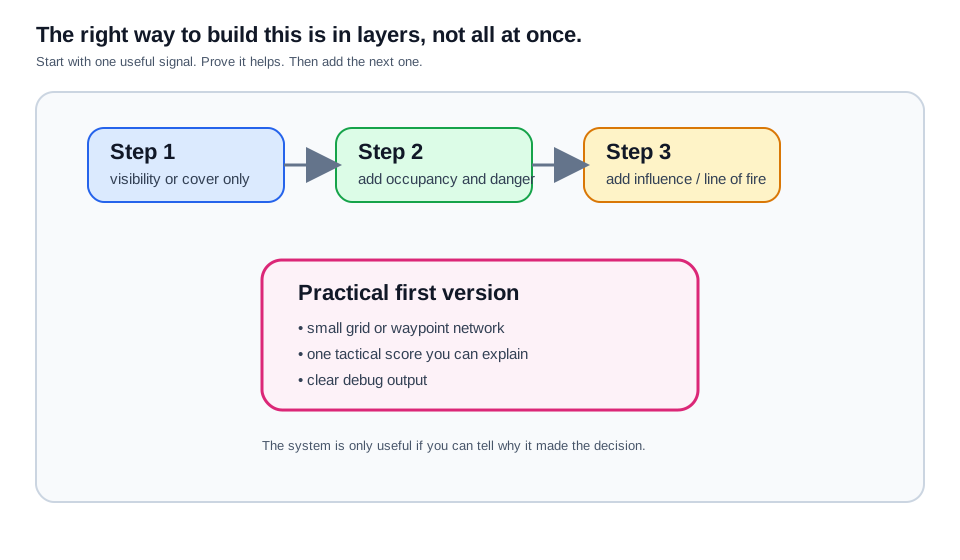
Start with one signal
The first step is to pick one tactical signal that is easy to measure.
Good candidates are:
- visibility
- cover
- a small penalty for exposed paths
The point is not completeness. The point is to get a result that changes behavior in a useful way.
Add a second layer later
Once the first signal works, add a second one.
That might be:
- occupancy
- danger
- line of fire
- influence
Each new layer should earn its place. If a layer does not improve the decision, it should stay out.
That discipline keeps the system understandable.
Keep the score explainable
A tactical score is only useful if it can be explained.
When the AI chooses a spot, the system should be able to say why:
- this route is exposed
- this area is crowded
- this position is visible
- this flank is under pressure
If the reason is not visible, debugging becomes guesswork.
What to avoid
The main mistake is trying to build a perfect tactical brain on day one.
That usually leads to a system that is hard to tune and hard to trust.
A smaller system with one clear benefit is better than a large system nobody understands.
A practical shape for version one
A useful first version usually looks like this:
- a small waypoint graph or grid
- one tactical score
- clear debug output
- one or two simple overlays
- a gradual path to more layers
That is enough to prove the idea without overbuilding it.
Practical takeaway
Tactical AI works best when it grows in layers.
Start with one reliable signal. Add another only when it improves the model. Keep the decision explainable at every stage.
That is how a tactical system stays useful instead of turning into noise.