2 minutes
Part 4: Spatial Databases for Tactical AI

A single tactical score is easy to compute and hard to trust.
A layered spatial database is easier to debug because each layer answers one question.
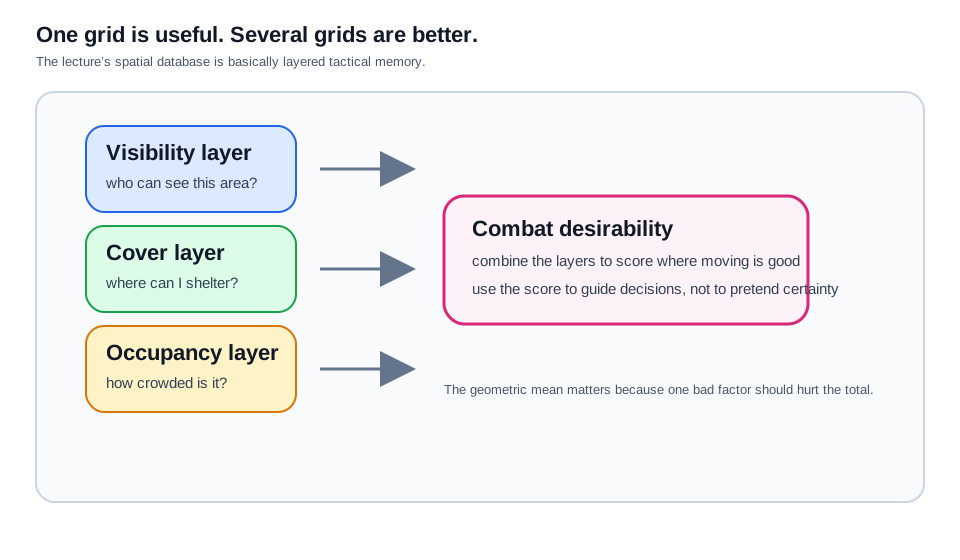
Why layers matter
A tactical AI usually needs more than one kind of spatial information.
One layer can describe visibility. Another can describe cover. Another can describe occupancy or line of fire. Keeping those signals separate makes the system easier to reason about.
That is the main idea behind the spatial database in the lecture: represent the map as a stack of tactical views.
Common layers
The slides describe several useful layers:
- visibility
- openness
- cover
- area occupancy
- line of fire
- light level
- area search
Each layer answers a specific question.
- visibility: how exposed is this area?
- openness: how much room is available?
- cover: can an AI survive here?
- occupancy: how crowded is the area?
- line of fire: where are weapons aimed?
- light level: is the area bright or dark?
- area search: has the area already been checked?
That separation is important. It keeps the model inspectable.
Combining the layers
The lecture uses a combat desirability layer as an example.
That layer combines signals such as openness, cover, and occupancy into one score.
The exact formula matters less than the design principle: multiple tactical signals should be combined carefully, not smashed into one arbitrary number.
The geometric mean is a good warning here. It prevents one good factor from hiding several bad ones.
Why this is better than a black box
If the AI chooses a bad position, a layered system makes it possible to find out why.
Was the area too exposed?
Was it crowded?
Was there too much line-of-fire pressure?
A single hidden score cannot answer those questions. Separate layers can.
That is valuable for debugging and for balancing the AI.
Practical takeaway
Spatial databases make tactical AI easier to extend because each layer stays focused on one signal.
That makes the system more readable, easier to debug, and less likely to collapse into one opaque heuristic.
The final step is to turn this into a simple implementation plan.