3 minutes
Part 1: What Tactical Terrain Actually Means

Tactical terrain analysis is the practice of asking what the map makes possible.
A hill, wall, chokepoint, or dark corner is not automatically useful. It becomes useful when it changes movement, visibility, or risk. That is why terrain analysis matters: it turns the map into data that an AI can evaluate.
The basic question
The core question is simple:
Which parts of this map give one side an advantage?
That question is more useful than a hand-authored list of “important” spots. Hard-coded regions are fragile. They break when the map changes, when the level is procedural, or when the tactical situation shifts during play.
A better approach is to measure the map directly.
Static and dynamic points of interest
Tactical value comes from two kinds of features:
- static features exist in the map itself
- dynamic features appear because of the current battle state
Static features include cliffs, water, walls, edges of the map, natural chokepoints, and built structures.
Dynamic features include the front line, a retreat route, a newly opened flank, or a region that has become dangerous after unit movement.
The difference matters because a tactically useful location is not useful in isolation. It is useful relative to the current game state.
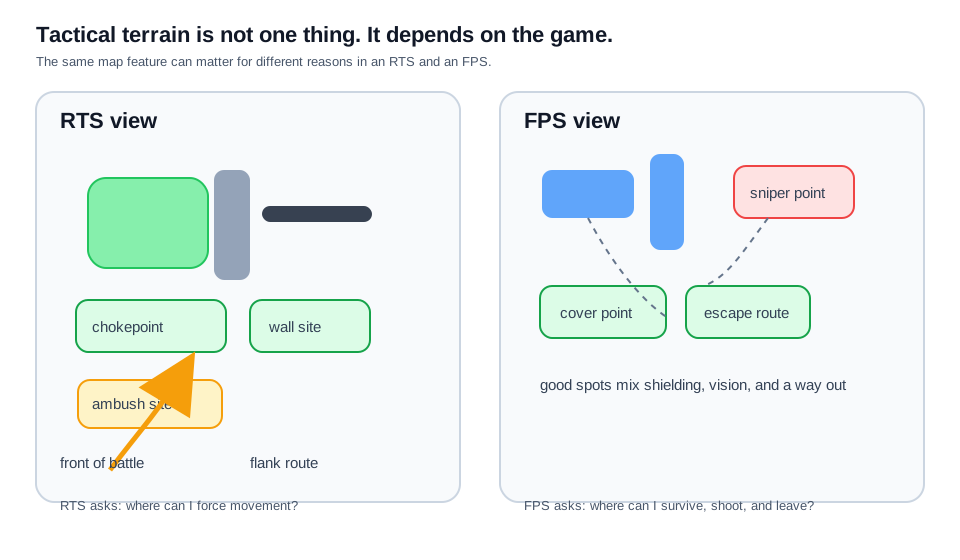
RTS examples: controlling movement
In an RTS, terrain usually matters because it controls movement and commitment.
A chokepoint forces units through a narrow route. That gives defenders a chance to concentrate force. A cliff or wall changes the paths an army can take. An ambush site gives one side a timing or positioning advantage. A flanking route breaks a straight-line engagement by creating another angle of attack.
The common pattern is control. Good terrain makes enemy movement more predictable.
FPS examples: controlling visibility
In a shooter, terrain usually matters because it changes what can be seen and what can be hit.
Cover points reduce exposure. Sniper positions trade safety for sightlines. Escape routes matter because survival often depends on leaving a bad position quickly. Dark areas and low-visibility paths can reduce risk during movement.
A good spot in an FPS is rarely just “high ground.” It usually combines protection, visibility, and a way out.
What makes a location tactically useful
Across both genres, the same properties come up repeatedly:
- control
- visibility
- protection
- accessibility
- cost
A tactically useful place does one or more of these things well. It forces movement, improves line of sight, reduces exposure, or creates an efficient route.
That is a more reliable model than treating “high ground” as a universal answer.
Practical takeaway
Tactical terrain analysis is not about memorizing special map locations.
It is about identifying which parts of the map change the odds of a fight.
Once that idea is clear, the next step is easier: store visibility and exposure in the navigation data so the AI can use it directly.
That is where waypoint reasoning starts to become tactical reasoning.